Running 45 sponsorships as one brand
Spectrum's sports sponsorship portfolio grew to 45 partners. The creative strategy team of four supported all of it, as one brand, without adding headcount, by building an operating model and a toolkit instead of 45 campaigns.
- Company
- Spectrum
- Years
- 2025–2026
- Scope
- Sponsorship, national
- With
- Thornberg & Forester, Six+One, Spectrum’s in-house studio
Context
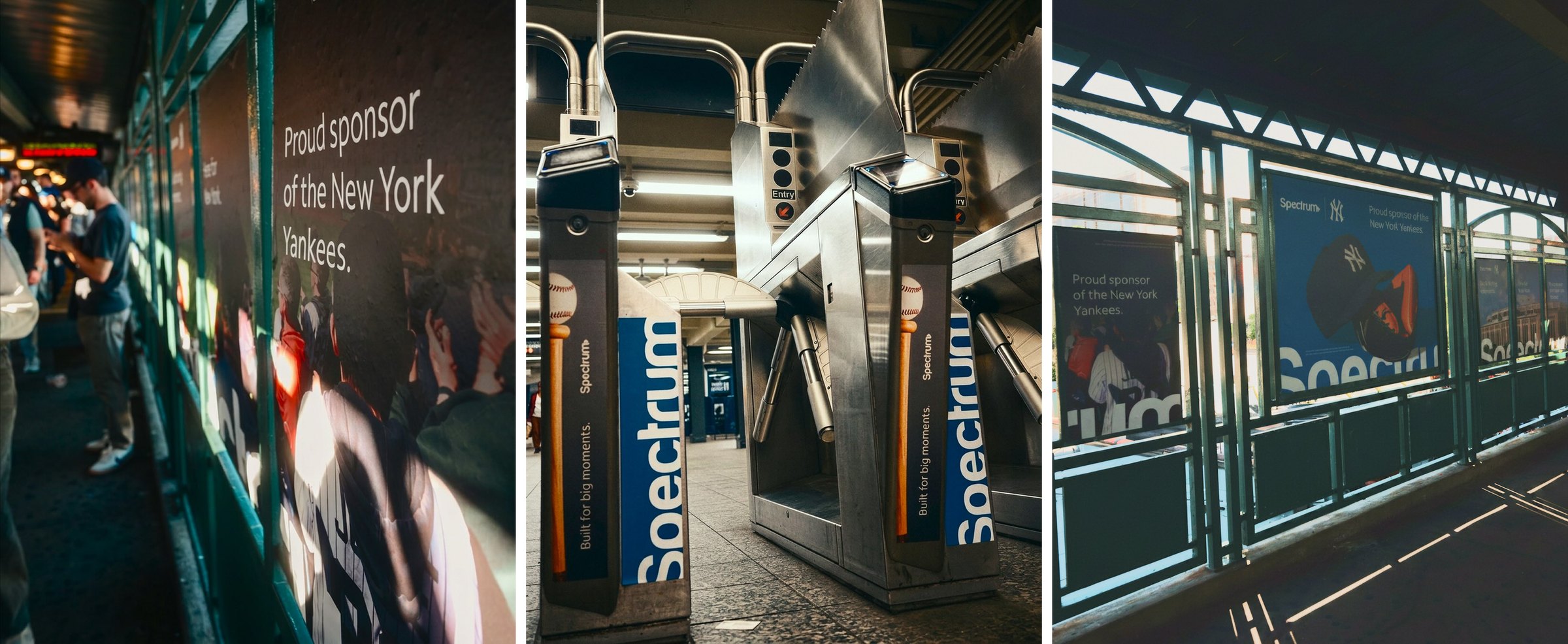
Spectrum sponsors across MLB, NBA, NHL, MLS, NFL, NASCAR and NCAA. In 2025 the portfolio was 15 partners, from the Dodgers, Yankees and Knicks to the Columbus Clippers and TeamSnap. By 2026 it was 45, and the growth landed on a creative strategy team already covering Internet, Mobile and Community.
The problem underneath
The brief was “support the sponsorships.” The real problem was that nothing was built to be reused. Every partner delivery was bespoke. Seasonal one-offs were rebuilt each year. Each specialty (media, experience, social, the agencies) invented its own version of what a Spectrum sponsorship meant. Arenas brought custom LED formats that changed from one building to the next. And the portfolio had no stated purpose, so it couldn’t be judged. The cost was a brand that showed up differently in every venue, and a team that would have needed to double to keep pace.
The system
I built two layers: a strategy that says what the portfolio is for, and a toolkit that lets anyone deliver against it and build on it.
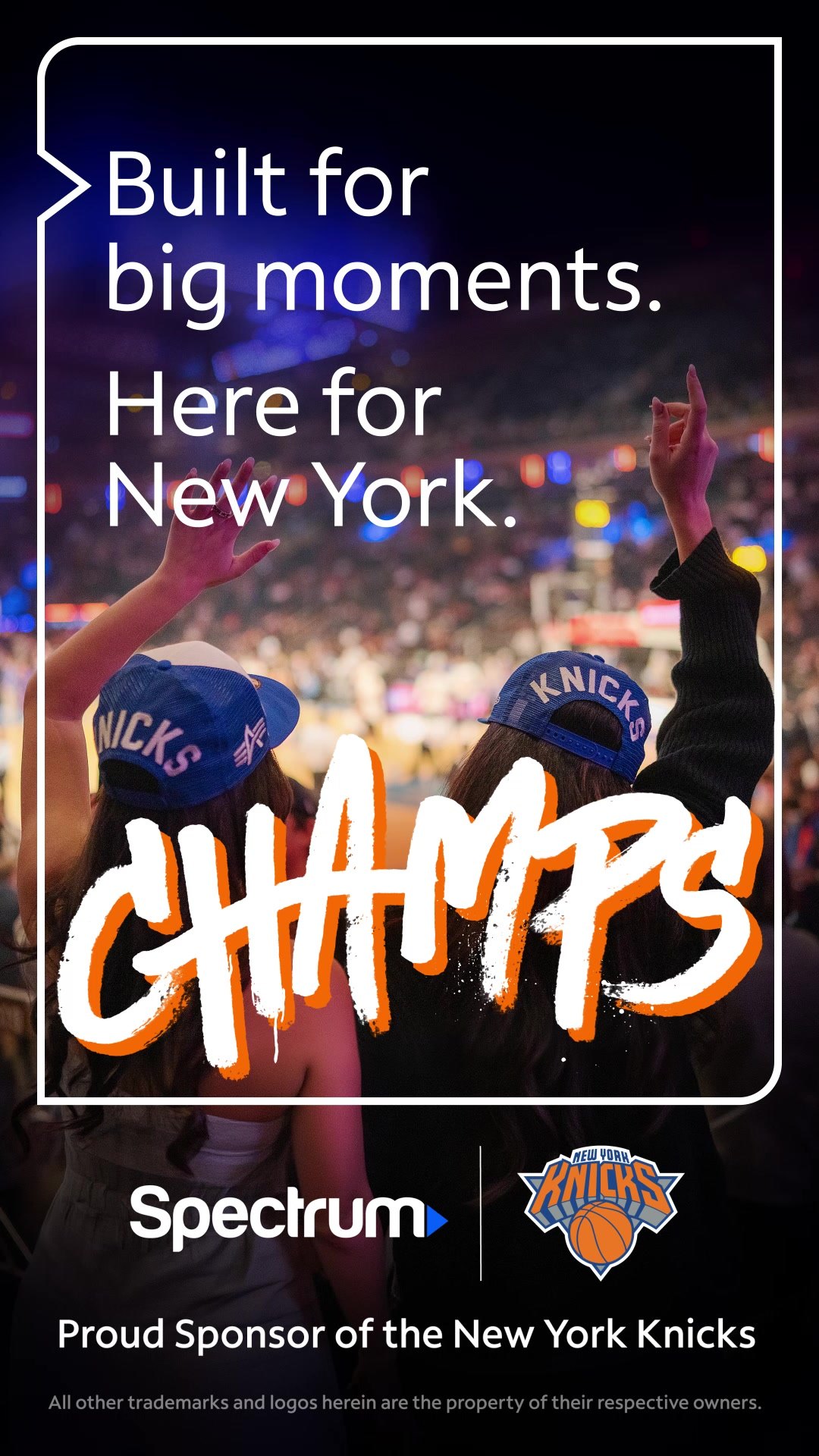
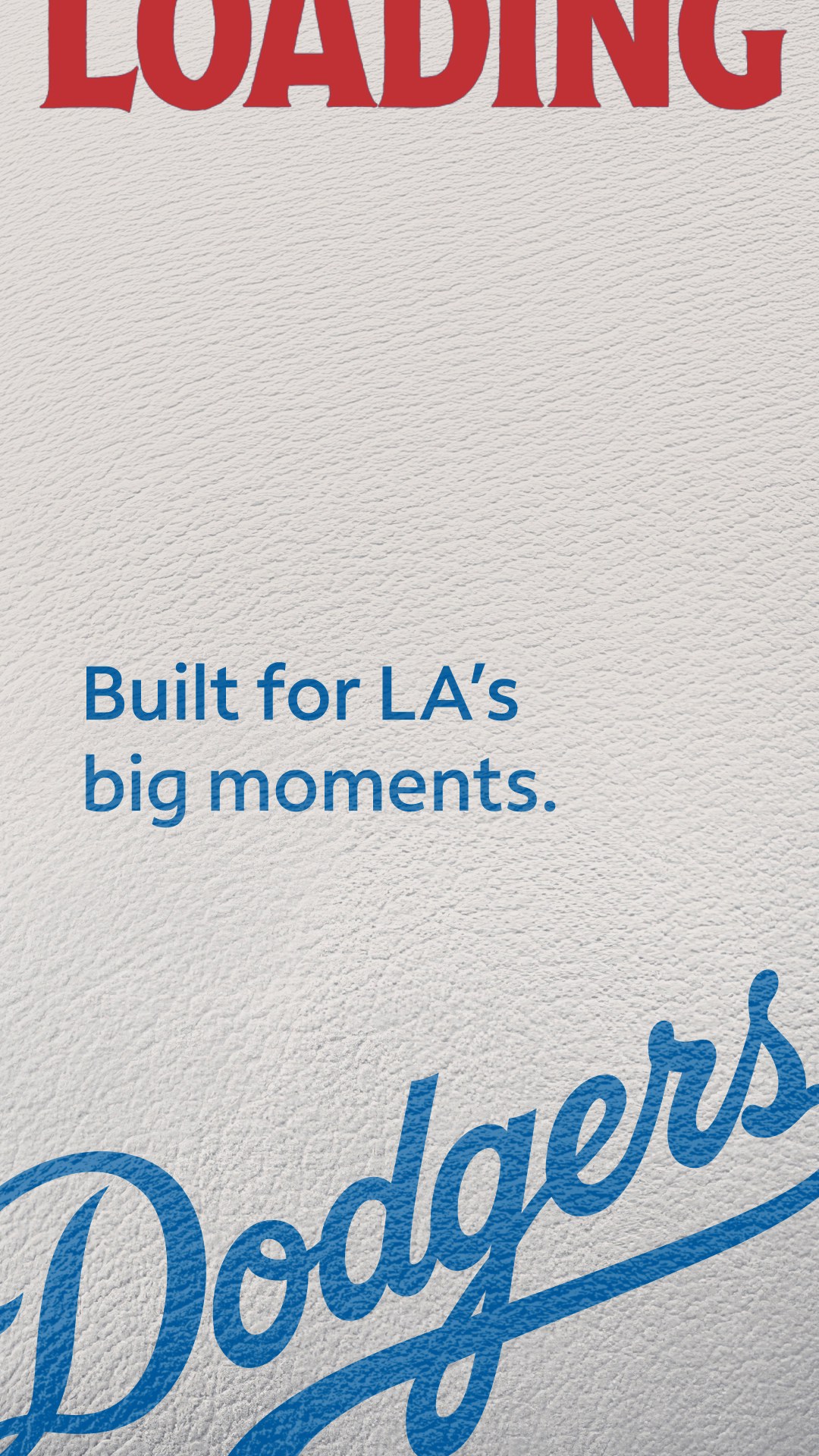
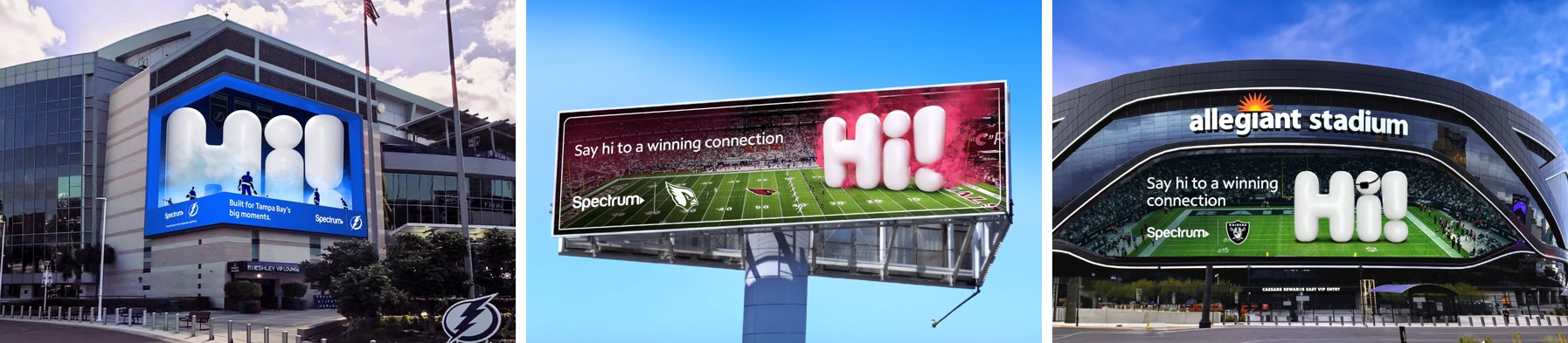
The strategy starts with an answer to what the portfolio is for: Spectrum connects fans and communities to the things they love. Everything else hangs off that. A working flow from portfolio objective to execution, brand affinity as the primary measure, a modular line (“Built for big moments. Here for [Community]”), and my team owning the platform, headlines and product framing so partners weren’t backed into picking from unrelated concepts. When the Hi! brand campaign launched, the sponsorship line plugged into it (“Say hi to a winning connection”) rather than running beside it.
The toolkit, designed by Thornberg & Forester to my brief, is what makes the strategy repeatable: a request from a new partner becomes a delivery without a creative restart. It holds four rules. A lockup rule that keeps one Spectrum presence against any team mark. An LED ribbon built as one master file that outputs any resolution, duration or frame rate. A scaling rule where fewer elements survive as formats shrink, down to logo and message. And rules for the extreme formats arenas throw at you.
The work
Outcome
15 to 45 partners
in one year
No added headcount
Agency-published
as a case study
The toolkit was built to carry 2026 deliveries and beyond, and Thornberg & Forester's published write-up is the outside read on whether it worked. The inside read is what it absorbed without a redesign: a regular season, a playoff run written onto the base the night it happened, an October skin for three ballclubs, and then a new brand campaign. When Hi! launched in September 2026, the inflatable letters went into the stadiums, "Say hi to a winning connection" went into the line slot, and the lockup, the attribution and the formats stayed where they were. The playoff work had its states built in: winner, eliminated and post-season creative were delivered before a series started, so the boards changed the morning after a game without a brief. In the last week of October 2026 the team had work moving for a dozen partners across six leagues, from a dasherboard to a four-episode fan series, all from the same toolkit. The social team's H1 2026 review found sponsorship posts earning a 10.4% engagement rate against 1.15% for entertainment, on a fifth of the volume: fewer posts, better posts. Brand affinity, the measure the strategy set, wasn't yet reported when I left.
What I'd change
I built the output system before the input system. The toolkit fixed how work left the team; a brief template for incoming partner requests would have fixed how work arrived, and I'd build that first next time.
Guidelines and toolkit by Thornberg & Forester. Executed with Thornberg & Forester, Six+One, and Spectrum's in-house studio.